Daddy’s Girl Embroidery Design Review
First Impressions and Visual Personality
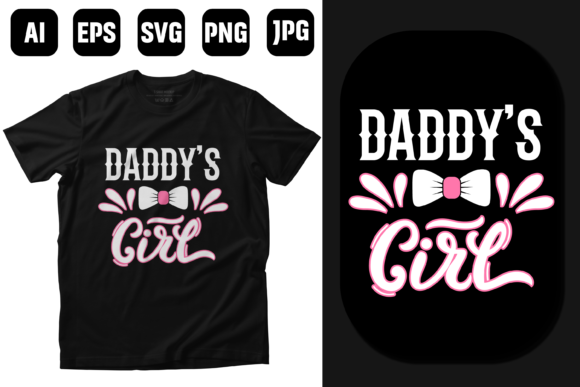
When I first opened the Daddy’s Girl- Fathers T Shirt Design, it immediately struck me as a heartfelt, nostalgic piece with strong sentimental appeal. The design features a stylized illustration of a young girl holding hands with her father, surrounded by soft script lettering that reads “Daddy’s Girl.” The overall look is warm and approachable, making it ideal for personal gifts or boutique items aimed at celebrating family bonds.Where This Design Shines
One of the standout qualities of Daddy’s Girl- Fathers T Shirt Design is its adaptability across multiple embroidery projects. Whether you're working on a handmade product like a personalized gift or scaling it for commercial embroidery use, this design offers a solid foundation.- Custom Apparel: Works great on both t-shirts and sweatshirts, especially in sizes large enough to accommodate the full layout.
- Baby Items: Can be simplified or resized for smaller products like onesies or bibs, though care must be taken to preserve readability.
- Holiday Gifts: The emotional tone makes it suitable for Father’s Day or Christmas gifts, especially when paired with matching accessories like embroidered mugs or patches.
- Craft Business & Etsy Sellers: Offers excellent value as part of a themed collection—imagine pairing it with similar designs for family-themed bundles.
Design Limitations and Cautions
While the Daddy’s Girl- Fathers T Shirt Design is impressive, there are some practical considerations to keep in mind when using it in real embroidery projects.Firstly, avoid using it in small hoop sizes unless you’re willing to significantly reduce the complexity. The hand-holding figure and flowing text lose their charm when shrunk below about 6x8 inches. Tiny lettering may become illegible, and the delicate lines might not translate well on compact surfaces.
Secondly, consider fabric texture carefully. This design works best on smooth, woven fabrics like cotton, quilting cotton, or medium-weight knits. Textured materials such as canvas or flannel can distort the fine lines and make the stitching less crisp.
Thin or stretchy fabrics pose another challenge. If you plan to use this design on lightweight tees or activewear, you’ll want to ensure proper stabilizer is applied and stitch density is adjusted to prevent puckering or distortion. Dark fabric backgrounds also require attention to thread color contrast—lighter shades like cream or white will highlight the design better than black or navy unless you have access to specialty threads.
Curved surfaces like caps or hats are tricky with this design due to the horizontal layout. You’d need to split or rework the design to fit comfortably around the curve, which adds extra time and effort. Similarly, layered garments like hoodies or jackets might need adjustments to avoid stitching through seams or folds.
Designer Tips for Getting the Most from This Design
Here are a few notes I’ve picked up while integrating Daddy’s Girl- Fathers T Shirt Design into my workflow:- Test on scrap fabric first: Especially if you’re planning to use it on a new material or for a commercial embroidery project. You'll get a clearer idea of how the design behaves under different conditions.
- Check thread colors against your fabric: The default thread palette is nice, but always confirm that it provides sufficient contrast and complements your product’s aesthetic.
- Review stitch density settings: Dense stitch areas may require thinning out slightly for certain fabrics to prevent stretching or stiffness.
- Confirm hoop size compatibility: While not specified in the product description, it's important to verify what hoop sizes your machine supports and whether the design fits within them.
- Inspect small details: The subtle outlines and shading add character, but they can sometimes cause issues during digitization if not handled properly. Make sure those are intact in your file.
- Use black-and-white mockups: These help identify potential visibility issues before committing to a final product.
- Compare on light and dark backgrounds: This ensures you understand how the design performs across a range of colorways and materials.
- Apply proper stabilizer: A tear-away or cut-away stabilizer is recommended for most applications, particularly if frequent washing is expected.
- Verify licensing before selling: If you’re an Etsy seller or digital product creator, always double-check the license terms provided by the store to ensure it allows commercial use.